California Waterblog
- Happy New Water Year 2027! – following three years of unusually average California hydrologyby Christine Parisek on October 1, 2026 at 5:31 pm
By Jay Lund . . . October 1 marks the beginning of California’s new Water Year (WY). Water years here run from October 1 until September 30 of the next calendar year and are named for the calendar year of the bulk of the water year (January – October). October 1 is also the nominal The post Happy New Water Year 2027! – following three years of unusually average California hydrology first appeared on California WaterBlog.
- Are you going to the 2026 Bay-Delta Science Conference?by Christine Parisek on September 27, 2026 at 11:00 am
By CWS researchers . . . From September 28–30, researchers from the Center for Watershed Sciences (CWS) will join colleagues from across California at the 2026 Bay-Delta Science Conference in Sacramento. The conference brings together scientists, policymakers, engineers, resource managers, knowledge holders, community advocates, artists, and others to think about the future of California’s Bay-Delta. The post Are you going to the 2026 Bay-Delta Science Conference? first appeared on California WaterBlog.
- Old Readings on California Waterby Christine Parisek on September 20, 2026 at 11:00 am
By Jay Lund . . . An earlier version of this post was published on the California WaterBlog in 2020. . . . Today’s water struggles have deep roots. Here is a small collection of older writings on California water, the youngest of which is still older than me. Beyond historical interest, these early The post Old Readings on California Water first appeared on California WaterBlog.
- A Guide for New California Water Wonksby Christine Parisek on September 13, 2026 at 11:00 am
by Jay Lund . . . An earlier version of this post was published on the California WaterBlog in 2023. . . . Water is a universal foundation for every problem and opportunity in California. Most people use it every day, yet even experts with decades of experience don’t know it all. (Alas, too many The post A Guide for New California Water Wonks first appeared on California WaterBlog.
- A secret to survival for California’s most endangered salmonby Christine Parisek on September 6, 2026 at 11:00 am
By Michael Milstein . . . Editor’s note: This post was originally published at: https://www.fisheries.noaa.gov/feature-story/secret-survival-californias-most-endangered-salmon . . . Traditional field research combined with new technology has revealed a secret to the survival of juvenile salmon as they form in their eggs, especially in low-water years when many do not survive, new research from NOAA Fisheries The post A secret to survival for California’s most endangered salmon first appeared on California WaterBlog.
- Tidal Restoration Round-Up: Insights from Two Studies in Suisun Marsh and the Deltaby Christine Parisek on August 30, 2026 at 11:00 am
By Elsie Platzer & Lynette Williams Duman . . . A friendship forged in mud On an unseasonably warm day in February of 2022, after being acquainted for approximately eight hours, we found ourselves canoeing across Big Break near Antioch, California. As we paddled against the wind we were busily dodging bass boats and floating The post Tidal Restoration Round-Up: Insights from Two Studies in Suisun Marsh and the Delta first appeared on California WaterBlog.
- Did the earliest human civilization have river basin management and reservoir operations? – Liangzhu Civilization of 3,100-2,300 BCby Christine Parisek on August 23, 2026 at 11:00 am
By Jay Lund, Shumin Liang, and Tingju Zhu . . . Every civilization had to organize the management of water across diverse populations and generations. Their histories offer perspective and relevance for water management today and in the future. Achieving human health, wealth, social justice ideals, and ecological sustainability all depend on managing water for The post Did the earliest human civilization have river basin management and reservoir operations? – Liangzhu Civilization of 3,100-2,300 BC first appeared on California WaterBlog.
- Meet California’s preeminent fish squeezer – Dr. Peter B. Moyleby Christine Parisek on August 16, 2026 at 11:00 am
By Jeffrey Mount . . . [Editor’s note: This article first appeared on California Fly Fisher as “Profile: Dr. Peter B. Moyle — Meet California’s Preeminent Fish Squeezer.”] For those of us who work on rivers, we often have nicknames for each other’s professions. I’m a rock kicker (fluvial geomorphologist), for example. But let me introduce The post Meet California’s preeminent fish squeezer – Dr. Peter B. Moyle first appeared on California WaterBlog.
- California’s “Lost Salmon” May Be Returningby Christine Parisek on August 9, 2026 at 11:00 am
By Rachael E. Ryan, Cho R. Adolfo, Emily K. Chen, Stephanie M. Carlson . . . California’s “Uncommon” Salmonid Amidst the decline of California’s salmonid populations is an unexpected uptick of pink salmon. In recent years, biologists monitoring California waterways have been reporting sightings of pink salmon. We became curious about these observations; were they The post California’s “Lost Salmon” May Be Returning first appeared on California WaterBlog.
- Where are they now: Francine De Castroby Christine Parisek on August 2, 2026 at 11:00 am
By Francine De Castro . . . I worked in the Aquatic Research Collective (ARC) lab with Dr. John Durand from 2019–2021 as an undergrad student, and my duties mostly included zooplankton ID with the occasional foray into the field to assist with the long-term Suisun and Arc sampling projects. My favorite memory as a The post Where are they now: Francine De Castro first appeared on California WaterBlog.
Media Updates

Don’t be fooled by an unfair and unnecessary water tax
Don’t be fooled by an unfair and unnecessary water [...]

Gavin Newsom budget calls for drinking water tax to help poor communities
The Sacramento Bee: Gavin Newsom budget calls for drinking [...]
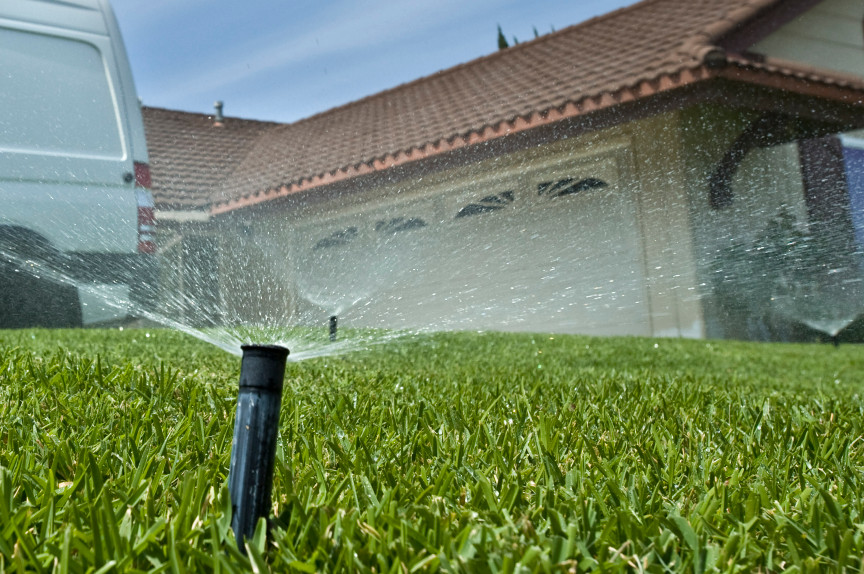
Drought or no drought: Jerry Brown sets permanent water conservation rules for Californians
The Mercury News: Drought or no drought: Jerry Brown sets [...]

Get ready to save water: Permanent California restrictions approved by Gov. Jerry Brown
The Sacramento Bee: Get ready to save water: Permanent California [...]
Water tax proposal poor policy
LA Times: Water tax proposal poor policy By Mark [...]
Aquafornia News
- California’s Prop 45 may be the biggest reform to CEQA in decades. Critics say it goes too farby Jennifer Fergesen on October 2, 2026 at 1:49 pm
… Proposition 45, sponsored by the California Chamber of Commerce, would streamline the approval process for a wide range of development activities considered “essential.” … [P]rojects eligible for streamlining would be limited, though several categories of development would qualify: housing, water infrastructure, clean energy, health services, wildfire prevention, broadband internet, education facilities and transportation. … Opponents of the proposition say so many changes for so many projects is an invitation for sprawl and polluting development. They worry that fast-tracking the approval process would inevitably lead to less comprehensive reviews and public comment, resulting in projects that yield toxic emissions, increase wildfire risk and squeeze energy and water supplies. … Specifically listed as ineligible for faster review are the contentious water tunnel proposal in the Sacramento-San Joaquin River Delta and California’s high-speed rail project. Other Prop. 45 news: Los Angeles Times: Your guide to Proposition 45: Faster CEQA review for housing and infrastructure The Sacramento Bee (Calif.): Democratic leaders criticize Prop. 45 campaign for donations to Calif. GOP, DeMaio View Original Article read more
- Federal agencies lag on networked device cybersecurity requirementsby Jennifer Fergesen on October 2, 2026 at 1:43 pm
Only seven of the 22 civilian Chief Financial Officer (CFO) Act agencies reviewed had fully addressed all three of the Office of Management and Budget’s networked device requirements, which cover establishing and maintaining device inventories and processing cybersecurity waivers, according to a new audit published Sept. 30 by the Government Accountability Office (GAO). The report says the gaps may leave agencies at risk of cyberattacks that could compromise sensitive data and systems. … Networked technologies face increasing cyber threats worldwide, and in July, cyber threat actors disrupted operations in the water sector by changing passwords to disconnect networked programmable logic controllers, a type of OT device. Other water cybersecurity news: The Washington Post: Opinion: More dangerous cyberthreats are coming. That leaves a limited window. View Original Article read more
- ‘Super’ El Niño could overwhelm aging L.A. sewage treatment plantby Jennifer Fergesen on October 2, 2026 at 1:22 pm
On the shores of Playa del Rey sits L.A.’s last line of defense against sewage streaming into the Santa Monica Bay — and a jacked El Niño this winter threatens to be more than a match for it. Built in 1950, the Hyperion Water Reclamation Plant handles roughly 95% of the city’s sewage on any given day — up to 800 million gallons of effluent from toilets, washing machines, sinks, industrial operations and more. Storms can overwhelm the aging facility, which suffered an equipment breakdown in 2021 that led to 17 million gallons of raw sewage gushing into the Santa Monica Bay. Los Angeles officials are bracing for more trouble if the forecast “super” El Niño brings heavy rains and flooding. … L.A.’s stormwater and wastewater systems are separate, but when it rains, water seeps into the ground and can sneak into the cracks of aging wastewater pipes. Other El Niño news: 9News (Denver, Colo.): This El Niño is now the strongest on record: What it could mean for Colorado’s weather ABC30 (Fresno, Calif.): Merced County declares local emergency as officials prepare for potentially strong El Niño Monterey County Now (Seaside, Calif.): Meteorologists say we’re in for a strong El Niño—but that doesn’t necessarily translate to a wet winter. KQED (San Francisco): An El Niño-driven ‘Kelvin Wave’ could raise Bay Area sea levels and flooding risk Ventura County Star (Calif.): As El Niño strengthens, Ventura County will waive these fees Daily Republic (Fairfield, Calif.): California ramping up preparation for El Niño winter San Diego Union-Tribune: Worried about El Niño? Here’s what San Diegans need to know to prepare View Original Article read more
- Fresno River otter sighting signals healthier San Joaquin River ecosystemby Jennifer Fergesen on October 2, 2026 at 1:20 pm
A river otter has been spotted in the San Joaquin River where Fresno conservation officials say the animals have only recently begun appearing again. The San Joaquin River Parkway and Conservation Trust posted about the sighting on social media Wednesday, saying river otters are top predators in river ecosystems and can indicate a healthy environment. … Sharon Weaver, executive director of the San Joaquin River Parkway and Conservation Trust, told GV Wire that otters have not been present in the area in the recent past but have started appearing near Sycamore Island. … She pointed to habitat improvements along the San Joaquin River, including efforts to improve conditions for salmon and strengthen the broader ecosystem. View Original Article read more
- Sunset Boulevard recycled water irrigation project advances with $1M in state fundingby Jennifer Fergesen on October 2, 2026 at 1:18 pm
San Francisco officials gathered Wednesday along Sunset Boulevard’s greenbelt, a 2-mile strip of plants and trees along the road, to celebrate an integral financing step in a project to deliver recycled water as the landscape’s irrigation source instead of potable water. Sunset Boulevard is a main thoroughfare running through the Sunset District connecting from Golden Gate Park to Lake Merced. The 60-acre greenbelt along both sides of the road is covered in trees and native plants that create habitats for critters and provide shade for residents. But it uses drinking water for irrigation, water that could be under threat amid droughts. Connecting the green space’s irrigation to a recycled water transmission pipe could save about 40 million gallons in drinking water per year. Other water recycling news: San Diego Red (Tijuana, Mex.): San Diego County’s first potable reuse plant: Pure Water Oceanside View Original Article read more
- Blog: Happy new water year 2027! – following three years of unusually average California hydrologyby Jennifer Fergesen on October 2, 2026 at 1:11 pm
October 1 marks the beginning of California’s new Water Year (WY). Water years here run from October 1 until September 30 of the next calendar year and are named for the calendar year of the bulk of the water year (January – October). October 1 is also the nominal beginning of California’s wet season. (No significant rain yet, by the way.) California’s hydrology has two basic seasons, wet and dry, with the wet season nominally from October 1 – April 1 (Figure 1). The first sizable storm sometimes arrives in late September and sometimes not until November (recently in 2021). Sizable storms rarely arrive after April. As we leave California’s long 2026 dry season and prepare, hopefully, for the wet season, it is good to reflect on the last water year and prepare for what is also California’s flood season. Other water year news: KTNV (Las Vegas): New water year begins with cuts on horizon KCRA (Sacramento, Calif.): How did Northern California do at the end of the water year? The Ukiah Daily Journal (Calif.): Lake Mendocino in 2026: 10 inches less rain, five feet less storage California Department of Water Resources: News release: As new water year begins, California prepares for strong El Niño and expanded water supplies View Original Article read more
- Tucson Country Club leases groundwater to Sahuarita mine projectby Jennifer Fergesen on October 2, 2026 at 1:10 pm
A local country club is facing criticism after signing an agreement to lease groundwater to a mining company. According to state Department of Water Resources records, the Tucson Country Club signed a short-term lease to provide Copper World with up to 75 acre-feet of groundwater per year. The mining company plans to pump the water from its well fields east of the Sahuarita town limits, near a state-designated subsidence feature. The lease is set to expire on Friday, Dec. 31, 2027, while Copper World’s 20-year, 6,000 acre-feet groundwater withdrawal permit from the state expires the following month in January 2028. Environmental advocacy group Save the Scenic Santa Ritas strongly opposed the deal, warning it will further deplete a stressed aquifer. Other groundwater news: SJV Water (Bakersfield, Calif.): Hanford-area growers agree to new fees they hope will hold off further state intervention SJV Water (Bakersfield, Calif.): Will Tulare County water district settlement foster more cooperation or open the door to water exports? Arizona Capitol Times (Phoenix): Arizona’s groundwater future hinges on 2026 election Capitol Weekly (Sacramento, Calif.): Opinion: California needs more than water usage reports. It needs water solutions. View Original Article read more
- Denver Water’s lawn-watering ban starts today. Here’s what happens if you ignore it.by Jennifer Fergesen on October 2, 2026 at 1:07 pm
Denver Water customers are banned from watering their lawns starting Thursday, and the state’s largest utility is threatening steep fines for those who break the drought-induced rule. The prohibition outlaws lawn watering and the use of spray irrigation at the start of October for the rest of the warm season, though customers can still hand-water trees, shrubs, flowers and vegetables. Residential customers who break the rule once will face a $500 fine. The fine increases to $1,000 for each subsequent violation and, if the watering does not stop, Denver Water says it will shut off the customer’s water service. The utility — which serves 1.5 million people across metro Denver — has sent postcards to customers warning them about the ban and the potential fines. Those postcards served as warnings, according to a Denver Water press release. Other Colorado drought news: Sky-Hi News (Granby, Colo.): Denver Water to reduce Fraser River flows amid extreme drought Kiowa County Press (Eads, Colo.): Heavy rain trims Colorado drought, but extreme conditions persist View Original Article read more